
The Science of Stepping Back: Inside the Validation Detox
How Breaking the Dopamine Feedback Loop Rewires Your Brain for Self-Trust

When I first heard the phrase "validation detox," I rolled my eyes a little.
Okay dont judge me, I bet you did too—, because it sounded like just another trendy self-help buzzword designed to sell journals or wellness retreats.
And yes, as someone who does sell journals and consequently has a journal with the same name, I am aware of the irony here.
But to be fair, this was before all of that. So once again, don't judge me until you hear the full story at least!
So like I said, when I first heard about "validation detox", I rolled my eyes a little, but then the deeper I looked into my own patterns, the more I realized it’s actually a necessary psychological intervention.
We aren't just dealing with a bad habit here; we are talking about an overstimulated reward system that desperately needs to be recalibrated so we can actually coexist with our own minds again.
Think about it: when external approval becomes your primary source of security, your brain essentially outsources its emotional regulation to the public.
To understand how stepping back actually reverses this, I had to look past the self-care platitudes and dig into the actual psychology, neurobiology, and cognitive conditioning of what happens when we stop performing for a crowd.
Hold onto your hats, this one goes deep!
Unhooking from the Invisible Slot Machine
The first major realization for me was understanding operant conditioning, specifically what psychologists call a variable ratio schedule of reinforcement.
It’s a dry term for a brutal reality:
this is the exact neurological mechanism that makes slot machines so addictive.
When you post an update, share a creative project, or even text a group chat seeking reassurance, you don't know exactly
when the praise will come, or
how much of it you’ll get.
Because the reward is entirely unpredictable, your brain stays in a state of hyper-vigilant anticipation, constantly humming in the background.
Opting into a validation detox is essentially forcing an
extinction trial on your brain.
By intentionally removing the behavior—stopping yourself from seeking approval or blocking the reward by closing the metrics and ignoring the opinions—you force your brain to endure the raw discomfort of the missing reward.
It feels incredibly uncomfortable at first. But over time, that deep-seated neurological association between
"I need to make a decision" and
"I must get outside approval first" finally begins to weaken and break.
Resetting the Chemical Noise
I used to think dopamine was the chemical of pleasure, the reward we get when we achieve something, but neurobiologists point out that dopamine is actually the molecule of
anticipation and
motivation.
It’s the thrill of the chase, essentially.
Every time you anticipate a text back, a "good job," or a wave of notifications, your brain releases a quiet surge of it, and when we are constantly hooked into these external feedback loops, our dopamine receptors become downregulated, meaning they get less sensitive.
You end up needing
more noise,
more likes, and
more praise just to feel a baseline level of safety and worth.
Sound familiar, those who have ever heard anything about addiction ever…?
Stepping away from the feedback loop is like a much-needed reset for your nervous system.
As the outside noise finally quiets down, your neural pathways become sensitive to subtle, internal rewards again.
You start remembering what it feels like to experience the quiet satisfaction of finishing a project simply for its own sake, or the deep calm that comes with making a self-directed choice that no one else ever needs to validate.
This is one of the reasons why allowing yourself to become bored, i.e. not distracted, not reaching for your phone or any tool to further overstimulate yourself for at least ten to thirty minutes a day is incredibly healthy…if really uncomfortable and foreign initially.
I can tell you from personal experience, this is not as easy as it sounds on paper.
I had no idea limiting screen time could be so difficult, because I hadn't counted on my computer, my tablet and my TV, but all of those are screens and all of them play different functions in my day to day.
Also everytime I tried to allow myself to become bored, my mind told me off. I would find myself almost automatically reaching for something to do. If not doomscrolling, then I'd start a case for more work. It was a hot mess.
Having been able to do it abit more recently, I can testify that it is worth it.
The brainfog is alot less, I grit my teeth less and I am not afraid to be alone with my thoughts because my nervous system is more regulated and I notice the difference between what I want to entertain and don't.
Moving the Center of Gravity
This entire journey is ultimately a shift in what psychology calls your
Locus of Control—which is really just a fancy way of describing where you think the power over your life lives.
When you’re addicted to validation, your center of gravity is entirely external.
Your self-worth is entirely at the mercy of your environment; if the room is cold, you feel broke or the algorithm and money ignores you, your internal safety completely collapses.
Choosing to deny yourself the quick fix of an outside opinion forces a massive cognitive shift inward.
When you refuse to reach for a lifeline text or an online metric, you are forced to sit with your own thoughts, navigate the emotional discomfort yourself, and ultimately provide your own reassurance.
You shift from an external locus to an internal one, moving your center of gravity back to where it belongs.
How Quieting the Room Brings Your Intuition Back Online
The most beautiful byproduct of this psychological reset is how it completely restores your intuition.
I used to think intuition was this mystical, unexplainable force, but psychologically, it’s actually
implicit learning.
It is your brain’s brilliant ability to rapidly process thousands of subtle environmental cues, past experiences, and physical somatic sensations—those literal gut feelings—to make a split-second decision without conscious reasoning.
But when you are addicted to validation, this incredible biological system gets completely hijacked by the noise.
Intuition speaks incredibly quietly.
It manifests as a subtle relaxation in your shoulders, a sudden internal clarity, or a faint physical tightening in your stomach.
When your brain is hyper-focused on the loud, urgent question of
"What will they think?", that focus generates massive cognitive static.
You literally cannot hear your own inner voice over the roar of your anticipation, but breaking the dopamine loop mutes the outside world, letting those internal signals become audible again.
It also changes things on a nervous system level, creating true
somatic safety.
Constantly seeking approval keeps you operating from a place of mild, chronic threat—the perpetual fear of rejection or being misunderstood—which keeps your sympathetic nervous system activated.
When you choose to validate yourself, you signal safety to your brain.
In that regulated state, your prefrontal cortex and the parts of your brain responsible for visceral awareness can finally communicate clearly.
You start to trust your gut because your gut is no longer locked in a fight-or-flight response to other people's opinions.
Ultimately, you build
self-efficacy through micro-choices.
Every single time you make a small decision during a detox—whether it's choosing an outfit, deciding a piece of work is done, or holding a boundary without polling a committee—and you survive the outcome, your brain registers a vital new data point:
"I made a choice, I backed myself up, and I am completely safe."
It creates a beautiful, upward spiral.
The more you rely on your intuition, the sharper and more accurate it becomes, steadily rebuilding the sacred foundation of self-trust.
Experience Through Story
Following a high-achieving young woman as she attempts to break a lifelong addiction to people-pleasing, dismantle the toxic mental scripts keeping her invisible, and reclaim her own self-worth in just 28 days.
→ Read: The Validation Detox Series
Explore the Psychology
Why does approval feel so powerful in the first place?
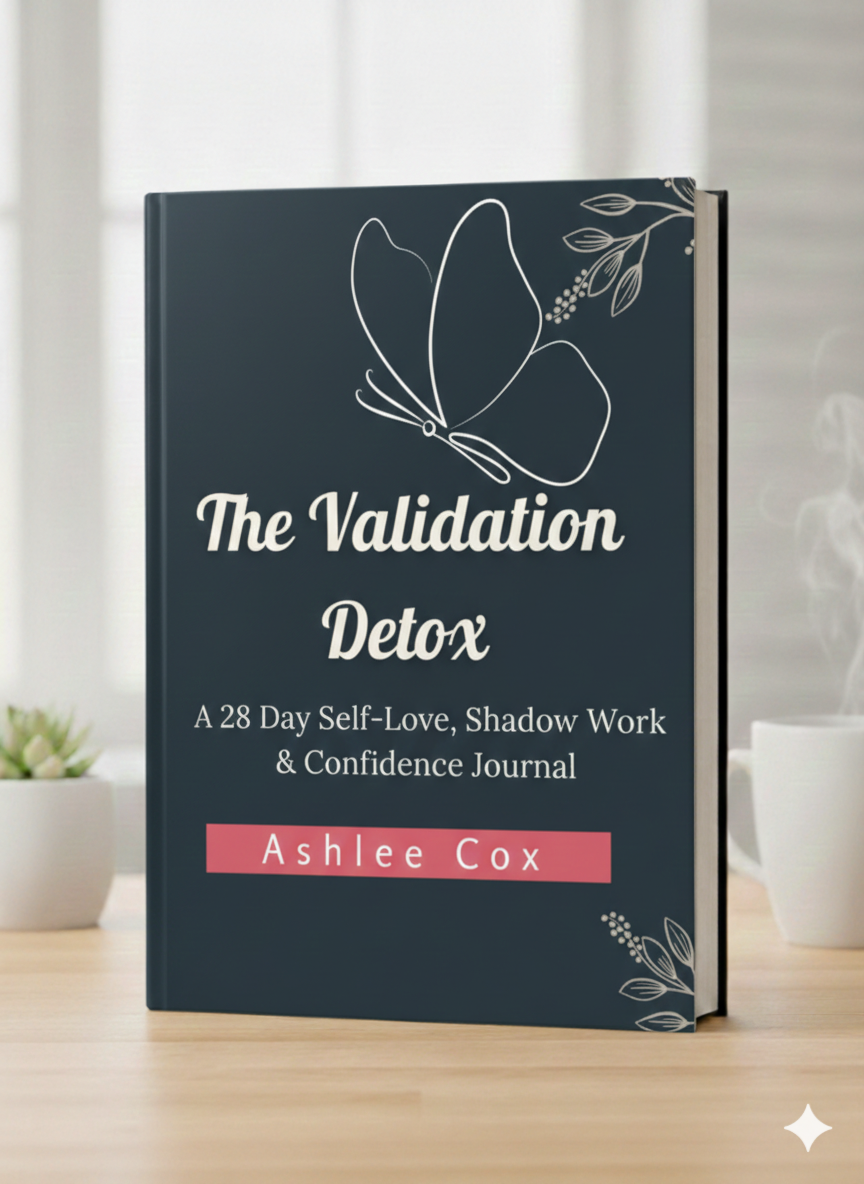
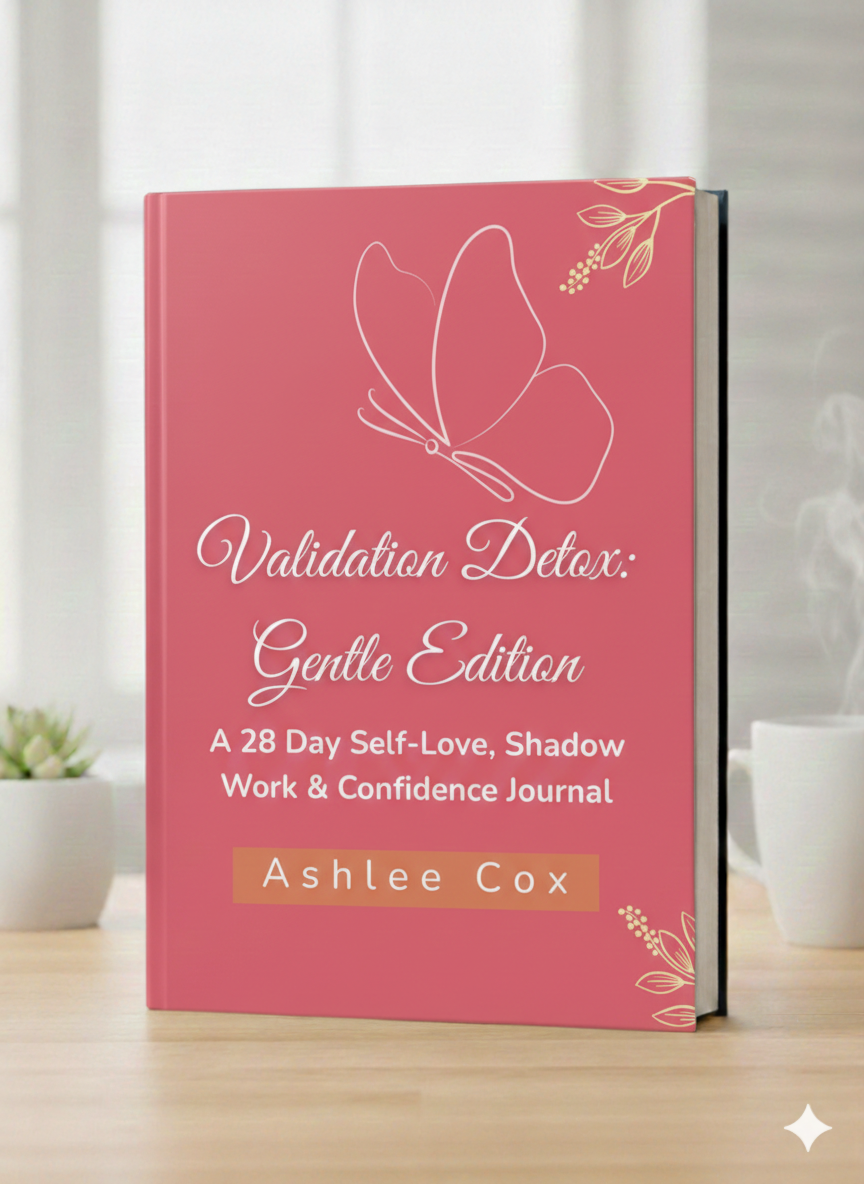
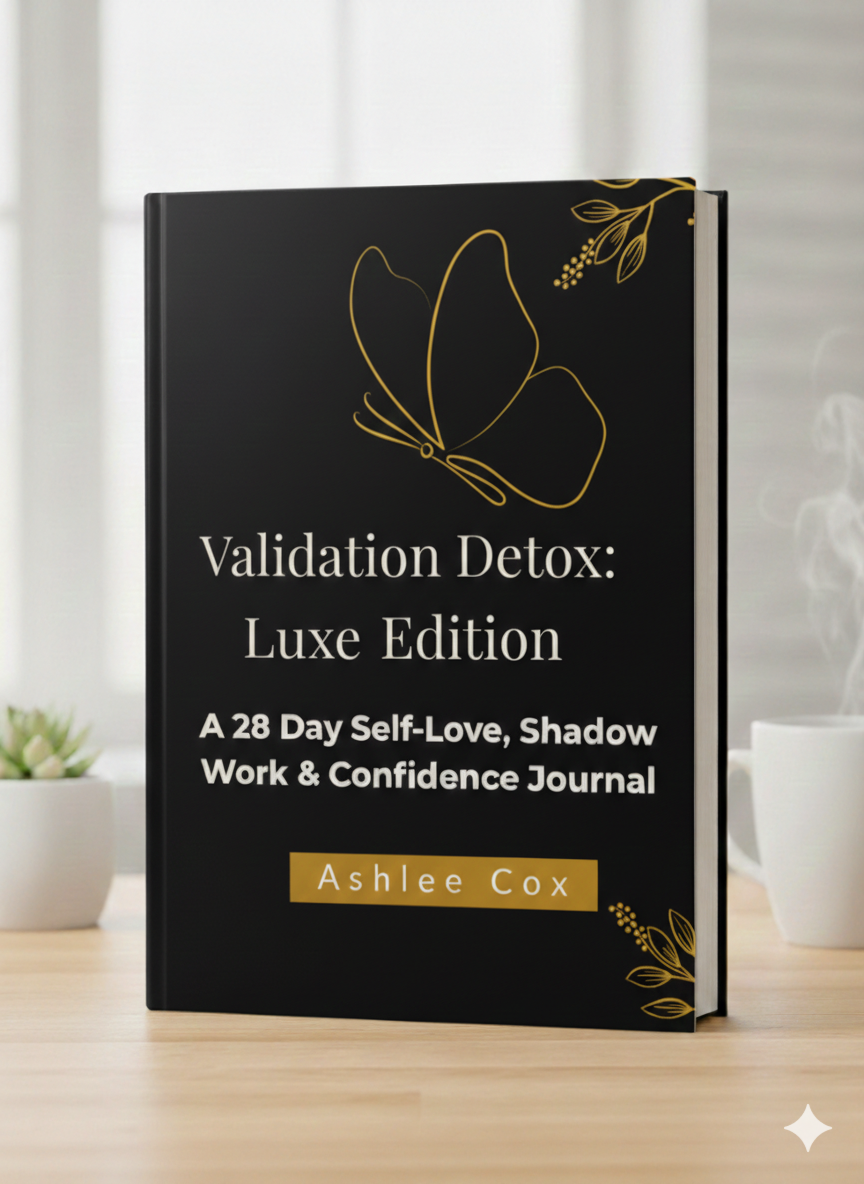
Start Your Own Journey with The Validation Detox Journal.
Designed to anchor your mind and body back into your own corner,
The Validation Detox Journal gives you a daily 5-to-10-minute system to build a foundation that no one else can shake.
Choose the edition that fits you best:
RELATED