
The Hidden Addiction to Validation
How to Stop Performing for Others and Start Trusting Yourself

The crazy thing about waking up to your own patterns is realizing how much of your life you’ve spent being an incredibly well-behaved hostage.
Lately, I’ve been thinking about the difference between connection and performance.
As human beings, we are fundamentally wired for the former, after all we’re social creatures, and praise and acknowledgment are vital guiding constructs to how we experience and navigate life here on Earth.
They help us navigate relationships, learn societal norms, and celebrate milestones.
There is, I believe, absolutely no shame in enjoying the warmth of a genuine compliment or the reassurance of a job well done.
Those are beautiful and dare I say necessary things for continued love, feeling safe and also feeling acknowledged and supported.
But I’ve come to realize that a subtle, deeply dangerous line exists between
appreciating
external approval and completely
depending on it.
For me, the issue with external validation arises when the need for applause starts overriding your own intuition, eroding self-trust and dismantling your inner safety net.
It leaves your nervous system working overtime because you are constantly trying to scan the room to see if you’re still safe and if not, how to mitigate the damage of the perceived threat..
When your internal compass is completely replaced by the opinions of others, validation ceases to be a pleasant bonus.
It becomes a hidden addiction.
The sneakiest part about this addiction is that it is socially acceptable—and often actively rewarded.
It rarely looks like a crisis from the outside, masquerading as high achievement, kindness, or digital savvy.
But when I forced myself to look closer at my own life, I started seeing the hunger for external proof everywhere.
I used to think I was just highly empathetic, but really, I was operating as a
proactive mind-reader.
It’s that exhausted habit of constantly altering your behavior, tone, or opinions to match what you think others want from you.
I found myself saying yes to things—outings, favors, projects—that I didn't actually have the bandwidth for, or nodding along with a perspective I secretly disagreed with, simply to avoid the discomfort and inherent threat of friction.
Or as I would later tell myself, to just
move things along faster.
What I know now is that every single time you prioritize someone else's comfort over your own truth, you send a silent message straight to your subconscious:
Their peace is more important than my reality.
And that is a very dangerous message to keep sending yourself.
Then there is the
digital echo chamber, which I’ve watched turn validation into a quantifiable analytic.
By the way when I say
digital echo chamber, I am referring to the way we treat our social media accounts.
The crazy thing is, social media accounts actually provide a literal scoreboard for our worth and many of us, while feeling it intensely, are no longer consciously aware of just how addicted and dependent we've become on the validation boosts. Or just how depressing its silence can be.
Doubt me?
Let's play out a scene then.
Maybe you post an accomplishment, a beautiful, aesthetic moment, or a thought-provoking statement, with a fire caption you spent way too long thinking up.
You hit post and then one minute later, find yourself compulsively refreshing the app.
And you already know that if the numbers don't hit some arbitrary internal baseline, a quiet, heavy sense of rejection starts to set in. It lingers and it grows increasingly heavy.
The real cost here isn't just screen time; it's that your lived experiences get filtered entirely through the lens of how they will perform online, disconnecting you from the real, unscripted joy of the present moment.
I also noticed it showing up as the
endless researcher.
This intriguing phenomenon presents itself when your self-trust is low, and making even minor decisions starts to require a full committee meeting, complete with external voting rights.
Let me ask you something and please answer honestly.
Before buying an item, changing a career path, or responding to an uncomfortable text message, do you text three different friends for their input?
I’ve been in that place where I felt incapable of finalizing a choice until someone else stamped it with their approval.
But when we operate this way, our intuitive "gut feeling" atrophies from lack of use, meaning, you effectively become a passenger in a life steered entirely by consensus.
And finally, my personal favorite trap: the
perennial achiever.
In a hustle-centric culture, productivity is the ultimate source of praise, tying your entire worth to your output.
You chase the next milestone, accolade, or victory, convinced that
this is the one that will finally make you feel secure, safe, and complete.
Yet, when you achieve it, the satisfaction lasts for a few hours before the anxiety returns, whispering,
What's next?
As business owners, project planners and entrepreneurs, we know this one well, because not only does this come u for us with money, but in other aspects of our lives as well.
We confuse what we do with who we are, and without an active project, that final release of success or external praise, we are left feeling entirely empty…. Which can too often lead to us questioning our own worth…
The Ultimate Cost: The Erosion of Inner Safety
What I've ultimately learned is this: when you live for the applause, you give everyone else the power to turn off the lights.
True inner safety means knowing that even if a room misunderstands you, an algorithm ignores you, money disapears like the ultimate magic trick, or a peer disagrees with you, your foundation remains completely intact.
The hidden addiction to validation trades that permanent, internal sanctuary for a temporary, volatile high.
Breaking the cycle doesn't mean you stop caring about people or that you become cold, rather, it just means reclaiming your role as the primary author of your own worth.
For me, it starts with a simple, quiet pause before looking outward—asking myself the one question that finally cuts through the noise:
"What do I think about this when no one else is watching?"
Experience Through Story
Following a high-achieving young woman as she attempts to break a lifelong addiction to people-pleasing, dismantle the toxic mental scripts keeping her invisible, and reclaim her own self-worth in just 28 days.
→ Read: The Validation Detox Series
Explore the Psychology
Why taking a step back is your healthiest next move.
→ Read:
The Science of Stepping Back: Inside the Validation Detox
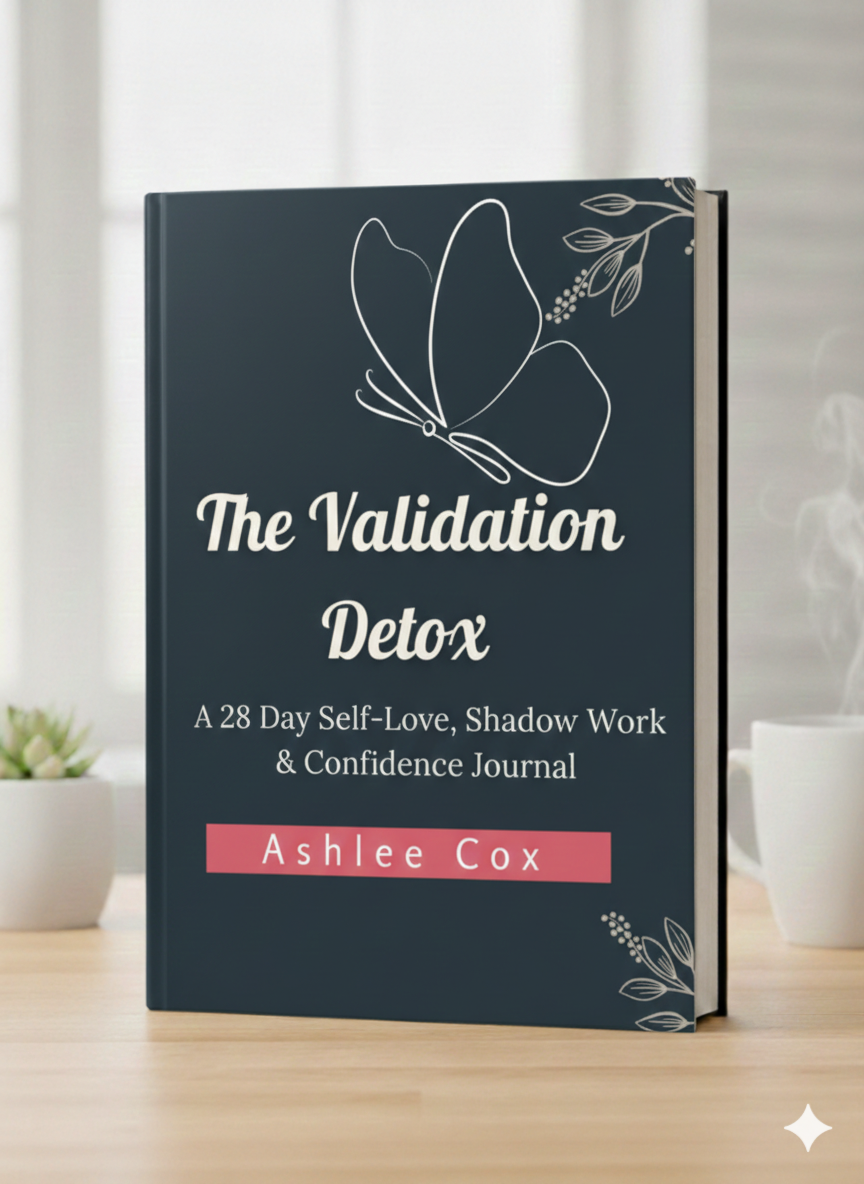
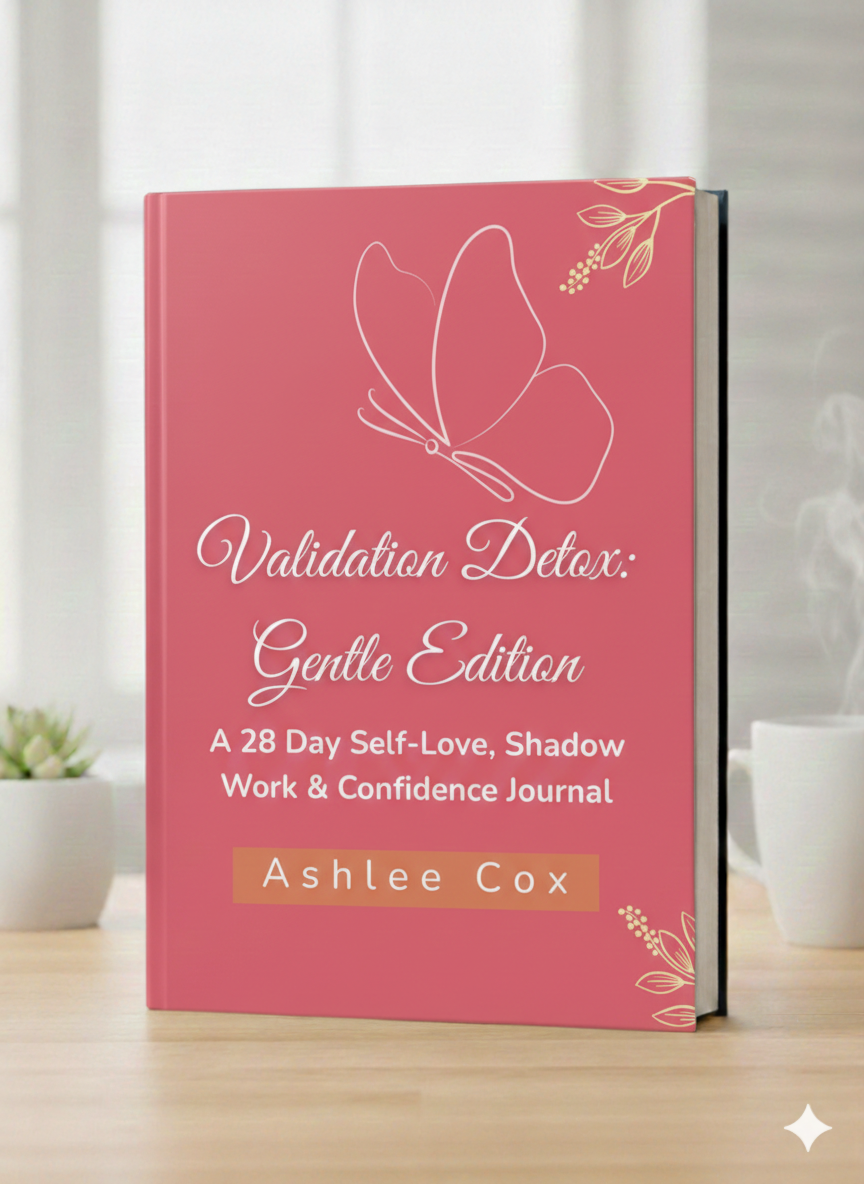
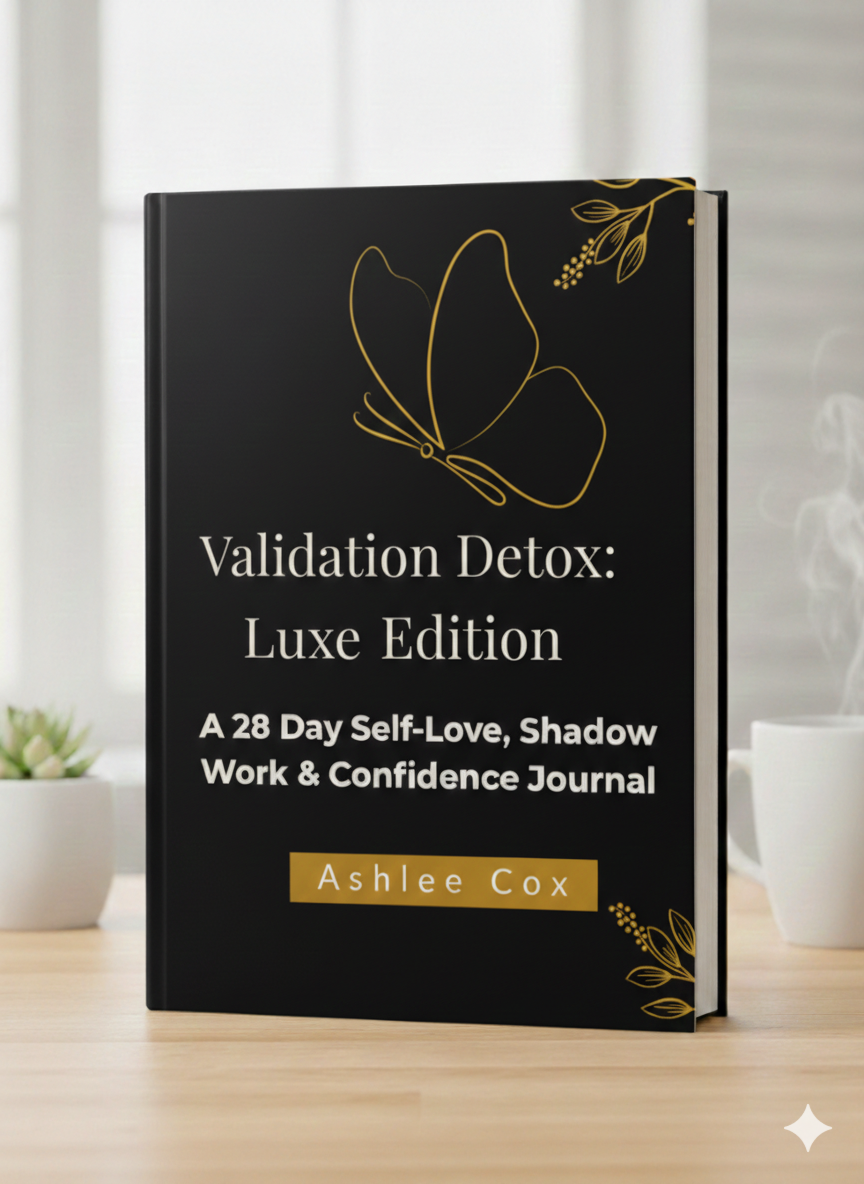
Start Your Own Journey with The Validation Detox Journal.
Designed to anchor your mind and body back into your own corner,
The Validation Detox Journal gives you a daily 5-to-10-minute system to build a foundation that no one else can shake.
Choose the edition that fits you best:
RELATED