
Resource Hub
>
When Everything Feels Like Too Much



Using When Everything Feels Like Too Much With Your Clients & Community
Helping people gently return to themselves when life feels overwhelming.
Sometimes the goal isn't to become more productive.
Sometimes it isn't to be more positive.
Sometimes the bravest thing a person can do is simply pause.
When Everything Feels Like Too Much is a guided workbook created for those moments.
Whether someone is experiencing emotional overload, decision fatigue, burnout, or simply the weight of carrying too much for too long, this workbook offers a compassionate space to slow down, reflect, and reconnect with themselves.
Designed for therapists, coaches, educators, wellness professionals, community leaders, and anyone who supports others, this resource provides structured reflection without adding more pressure.
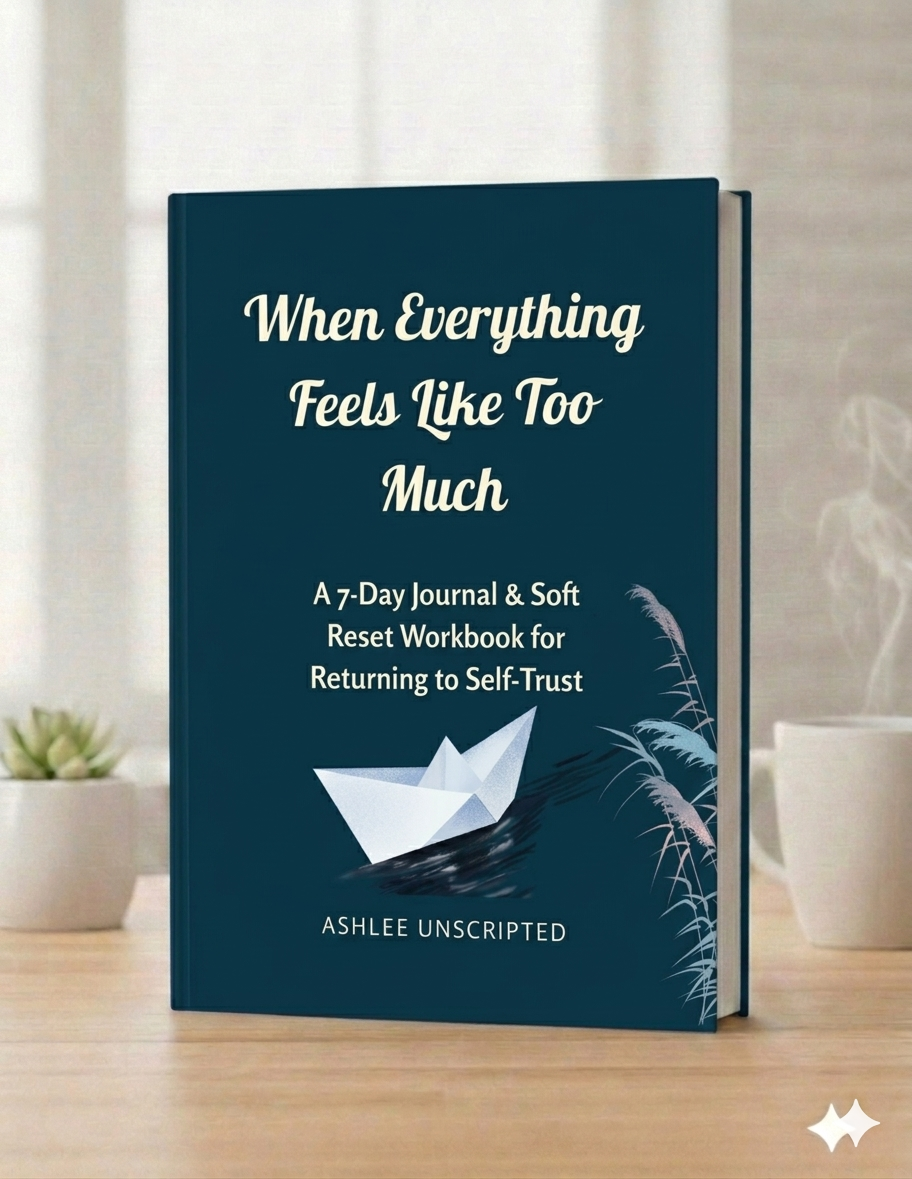
What Is When Everything Feels Like Too Much?
This workbook is a guided self-reflection experience designed to help readers move through seasons of overwhelm with greater self-awareness, self-compassion, and emotional clarity.
Rather than encouraging people to "push through," the workbook invites them to pause long enough to understand what they're carrying.
Through gentle prompts, grounding exercises, emotional check-ins, and intentional reflection, readers begin creating space for rest, perspective, and self-trust.
The workbook doesn't promise to eliminate life's challenges.
It helps people respond to them with greater kindness and resilience.
Who It's Designed For
This workbook is especially valuable for people who:
- Feel emotionally overwhelmed or mentally exhausted.
- Are navigating burnout or chronic stress.
- Have difficulty slowing down without guilt.
- Feel disconnected from themselves.
- Carry the emotional weight of caring for others.
- Are moving through life transitions or uncertainty.
- Struggle with perfectionism or constant self-pressure.
- Need a gentle re-entry into journaling or personal reflection.
- Want practical emotional support without feeling overwhelmed by another self-improvement program.

What Readers Experience
Each section encourages readers to slow down and reconnect with themselves in manageable, compassionate ways.
The workbook explores practices such as:
Emotional Check-Ins
Creating space to acknowledge thoughts and feelings without judgment.
Gentle Reflection
Understanding what is contributing to overwhelm instead of automatically trying to fix it.
Self-Compassion
Replacing self-criticism with curiosity and kindness.
Grounding Practices
Helping readers reconnect with the present moment through simple reflective exercises.
Rebuilding Self-Trust
Learning to listen to personal needs instead of constantly overriding them.
Small Next Steps
Encouraging progress through realistic, sustainable actions rather than overwhelming expectations.
Rather than asking readers to do more, the workbook invites them to carry less.
How Professionals Are Using It
When Everything Feels Like Too Much is designed to complement the meaningful work professionals are already doing.
It offers clients and community members a structured way to continue reflecting between conversations and appointments.
Professionals may recommend it as:
Between-session reflection
Supporting clients during emotionally demanding seasons.
Burnout recovery
Encouraging intentional pauses and healthier emotional habits.
Wellness programs
Providing participants with a compassionate self-care resource.
Women's circles and community groups
Creating shared conversations around overwhelm, boundaries, and emotional wellbeing.
Coaching support
Helping clients reconnect with themselves before focusing on goals or performance.
Educational environments
Supporting students navigating stress, transition, or emotional fatigue.
What Makes It Different?
Many self-help resources respond to overwhelm by asking people to become more efficient.
This workbook asks a different question:
What if the answer isn't doing more—but carrying differently?
Rather than emphasizing productivity, When Everything Feels Like Too Much prioritizes presence.
Instead of offering another checklist, it creates space.
Instead of pushing for immediate change, it encourages gentle awareness.
The workbook recognizes that healing often begins not with action—but with permission.
Permission to rest, feel and begin again.
When Everything Feels Like Too Much FAQs
Frequently Asked Questions
Quick and concise questions to the most asked questions about the When Everything Feels Like Too Much
Is this a therapy workbook?
No.
This workbook is a guided self-reflection resource designed to complement—not replace—professional mental health care.
Is it appropriate for someone experiencing burnout?
Yes.
Many readers use the workbook during seasons of burnout, emotional exhaustion, or transition as a gentle companion for reflection and self-care.
Can therapists recommend it?
Absolutely.
The prompts naturally support conversations around emotional regulation, self-awareness, boundaries, self-compassion, and resilience.
Can coaches integrate it into their programs?
Yes.
It works particularly well with coaching focused on wellbeing, burnout recovery, confidence, leadership, or life transitions.
Is this workbook suitable for groups?
Yes.
The reflection prompts can encourage thoughtful discussion in support groups, wellness workshops, retreats, book clubs, or community programs.
Does someone need journaling experience?
Not at all.
The workbook is fully guided, making it accessible for beginners while remaining meaningful for experienced journalers.
How long does it take?
The workbook is intentionally flexible.
Readers are encouraged to move through it at a pace that feels supportive rather than rushed.
Where can I purchase copies?
When Everything Feels Like Too Much is available through Amazon for individuals, organizations, community groups, and professionals supporting others through challenging seasons.
A Resource for Gentle Recovery
At Ashlee Unscripted, we believe personal growth isn't always about becoming stronger.
Sometimes it's about becoming gentler.
When Everything Feels Like Too Much was created to remind people that slowing down isn't failure.
It's often the beginning of healing.
If this workbook becomes a meaningful companion for the people you serve, we're grateful to be a small part of that journey.
Explore the
When Everything Feels Like Too Much Workbook
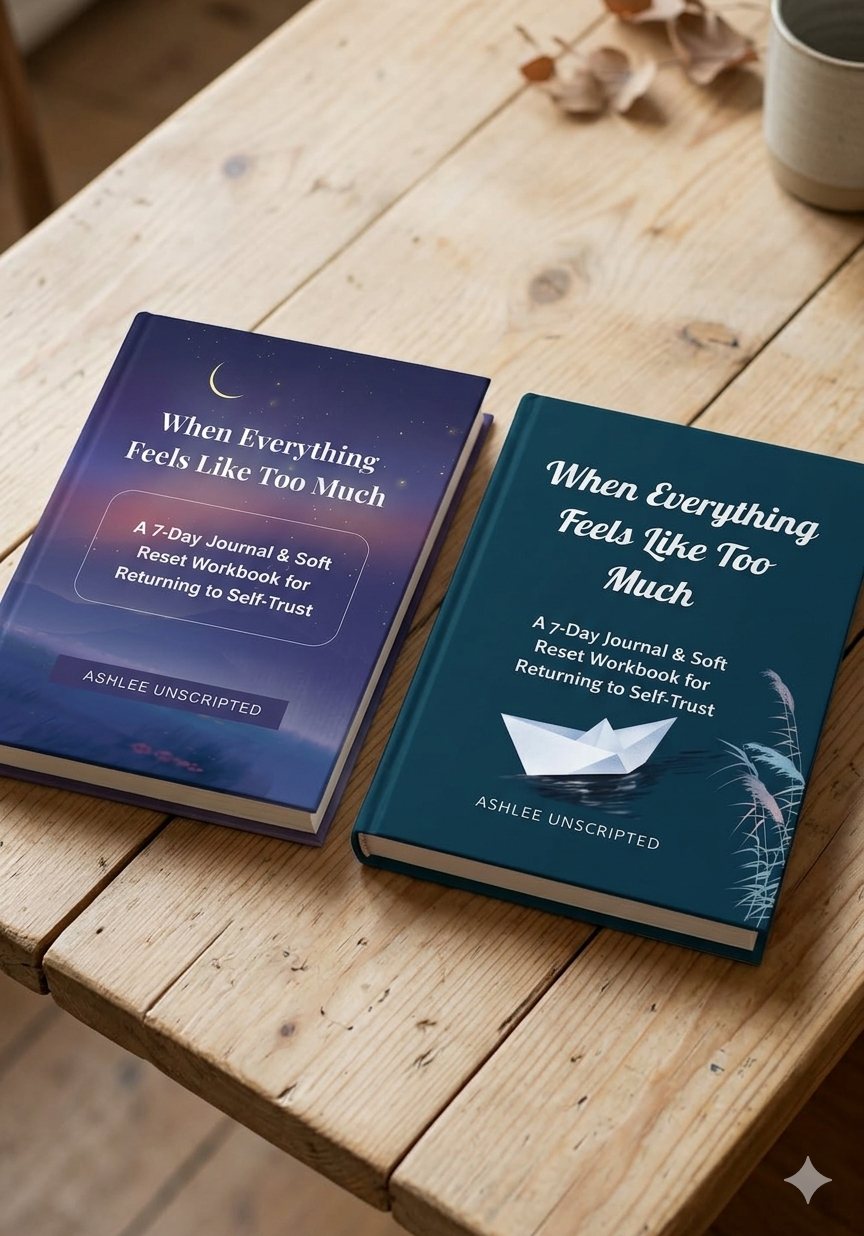
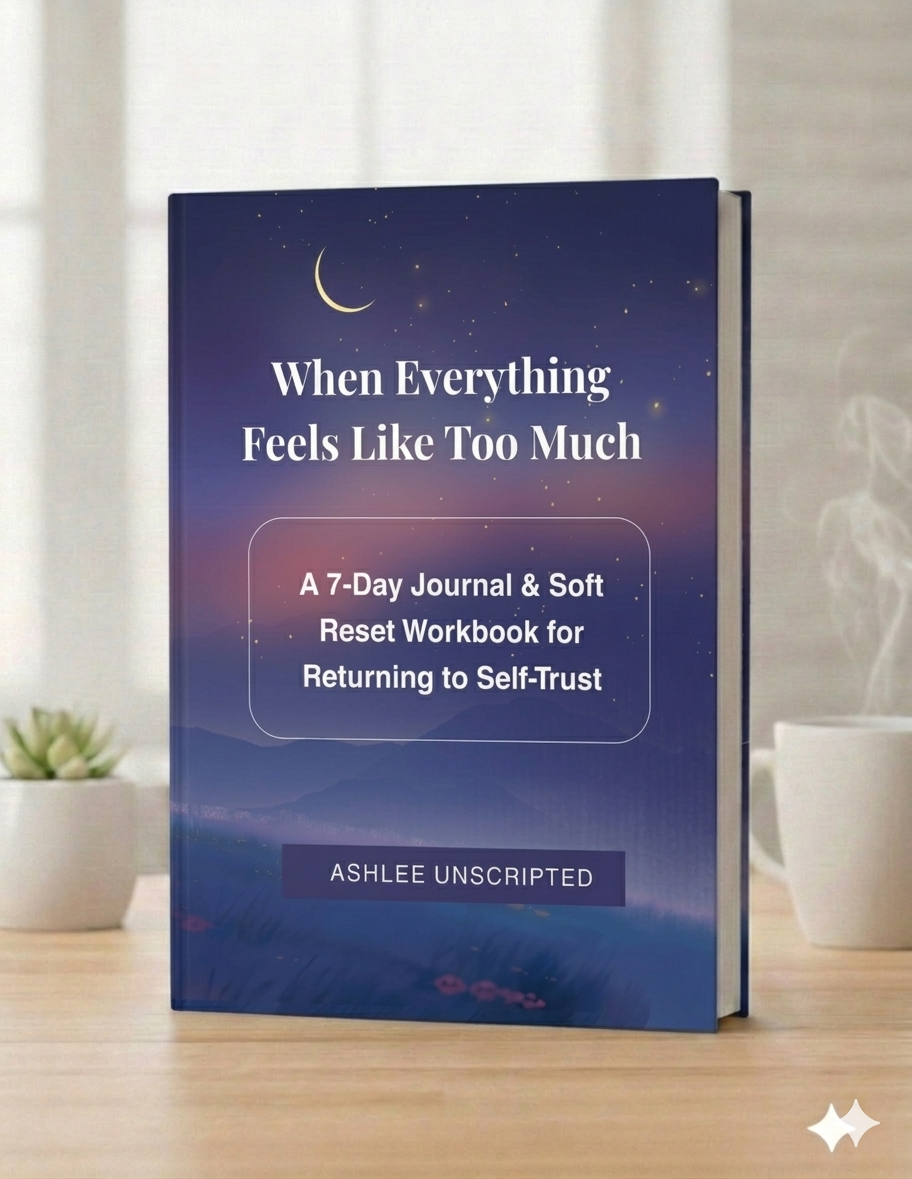
This journal has 2 unique bookcovers available on Amazon.
Learn more about the workbook and discover whether it's the right companion for your clients, community, or organization.
Thank you for the work you do to help people build healthier, kinder relationships with themselves.
We're honored to play even a small part in that journey.
Where Would You Like to Go Next?
Personal growth is rarely a straight line.
Depending on where your client and community are in their journey, one of these resources may be a natural next step.
Rebuild gentle daily structure
Create calm, intentional mornings that help you begin each day feeling grounded with the Morning Anchor Journal.
Rebuild confidence from within
Strengthen your relationship with yourself one reflection at a time with the Validation Detox Journal.
Explore the beliefs that contributed to burnout
Recognize and rewrite the expectations you've been carrying with the My Scripting Journal
